

There’s a specific kind of morning that doesn’t even need an explanation.
You wake up, and your body already feels like it’s bracing for impact. Nothing has happened yet, but your chest is tight. Your jaw is clenched. Your mind starts narrating before you’ve even sat up - a fast, slightly panicked checklist of everything that could go wrong, everything you didn’t finish, everything you’re behind on.
And then, almost like the day heard you and decided to match your tone, it unfolds in the same direction.
You spill something. You hit every red light. Someone’s email sounds passive-aggressive even if it probably isn’t. A small delay turns into a bigger problem. By the time the afternoon arrives, you’re tired and irritated and quietly convinced that life has it out for you.
Now here’s the strange part.
There are other mornings where the world looks the same, but feels completely different.
You wake up slower. You notice the light coming through the curtains. You stretch. You breathe. You’re not euphoric or pretending everything is perfect - you’re just present. Steady. Open enough to not be fighting the day before it begins.
And somehow the day responds differently.
People are warmer. You’re less reactive. You spot solutions instead of spirals. Even when things go wrong, they don’t hook into you the same way. It’s the same city, same job, same responsibilities… and yet it’s a different experience.
If you’ve ever had both types of days, you already know what I’m about to say.
Life isn’t only happening to you.
It’s happening through you.
And a lot of that has to do with the signal you’re broadcasting.
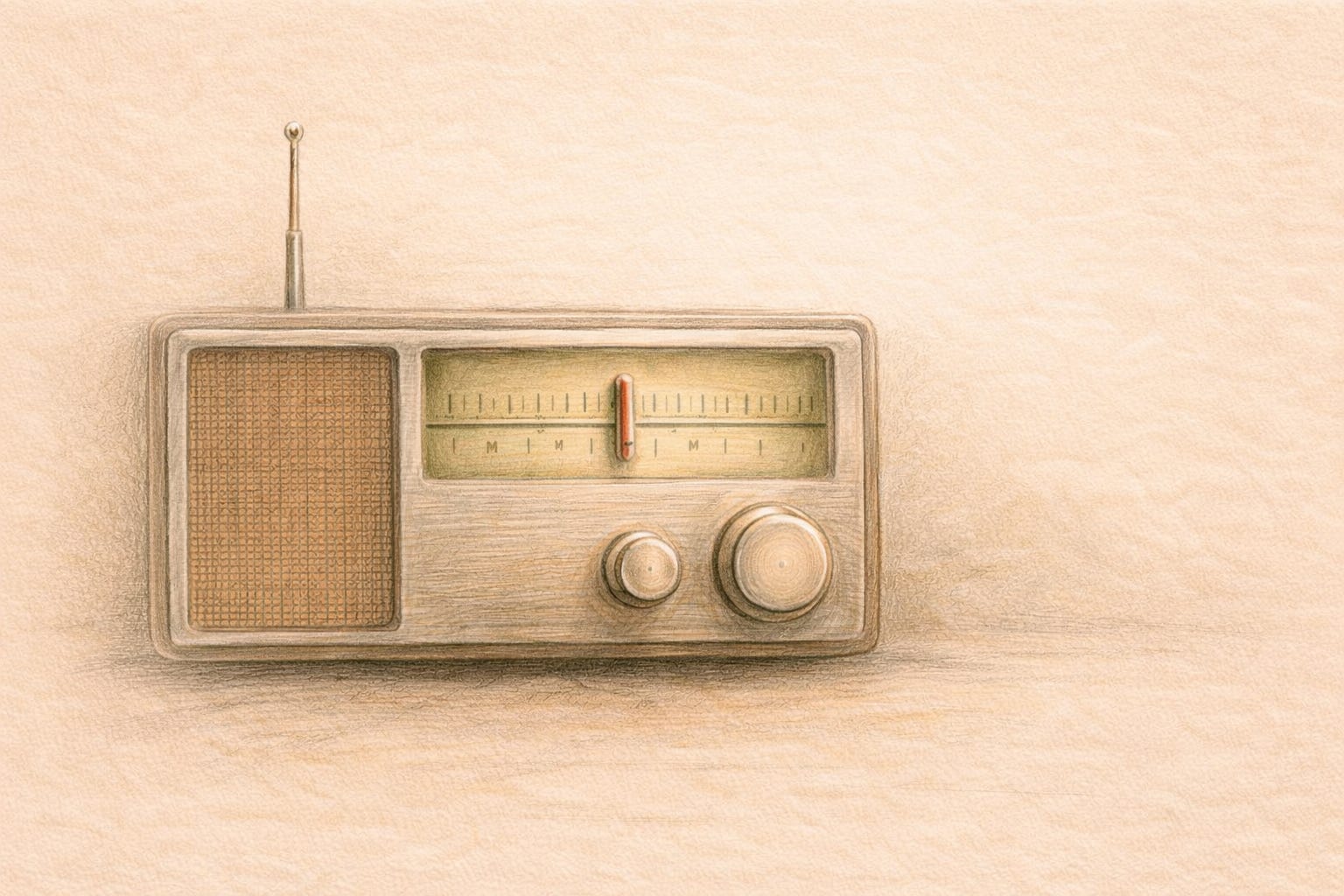
Because your mind is like a radio.
It’s always on. Always transmitting. Always tuned to something.
And the most liberating part is this: you can change the station.
The Signal You Send Is The Life You Live
Most of us think we move through life reacting to what happens.
But if you pay attention, you’ll notice something a little unsettling at first, and then oddly empowering.
You’re not only responding to life. You’re constantly setting the tone for how life meets you.
Your thoughts, emotions, and expectations create a kind of inner climate. And that climate influences what you notice, what you interpret, what you assume, and how you act.
A lot of people hear this and immediately jump to the shallow version of it: “So I just have to think positive thoughts?”
No.
Honestly, no.
This isn’t about forcing optimism or pretending you’re happy when you’re not. It’s not about denying pain or bypassing reality. That approach usually makes people feel worse, because now they’re not only struggling - they’re also failing at being “positive.”
This is about something much more grounded.
It’s about recognizing that your inner world is not neutral. It’s active. It’s shaping how you move, what you choose, and what you allow in.
And whether you like it or not, it’s broadcasting a frequency.
Emotion Is The Volume Knob
Let’s simplify it.
If your mind is a radio transmitter, your thoughts are the words being spoken.
But emotion is what gives those words power.
A thought without emotion is quiet. It passes through.
A thought charged with emotion becomes loud. It repeats. It becomes believable. It becomes the lens you see through.
This is why you can say, “I want love,” a hundred times and feel nothing, and it doesn’t change much.
But if you feel deeply unworthy, guarded, and afraid of being left, that becomes the signal with strength. That’s what shapes your choices. That’s what you subconsciously communicate. That’s what you’re likely to attract and reinforce.
Same with money, health, success, anything.
It’s not the occasional hopeful thought that directs your life. It’s the emotional pattern that runs under your days.
And just to be clear, you don’t need to control every thought. That would be exhausting and borderline impossible.
What matters is your overall emotional baseline.
One rainy day doesn’t change the climate.
But if it’s raining every day, you’re going to start living like it.
Why “Just Believe” Doesn’t Work And Why That’s Not Your Fault
There’s a reason people try the Law of Attraction, get excited for a week, and then feel disappointed.
They hear the slogans.
“Think positive.”
“Believe and you will receive.”
“Act as if.”
And then they try to paste those ideas onto a nervous system that’s exhausted, a mind that’s been trained to worry, and a life that feels genuinely overwhelming.
So they do the affirmations while secretly feeling anxious.
They visualize while doubting it will work.
They try to “be high vibe” while suppressing real emotions.
And when nothing shifts fast, they assume the whole thing is nonsense.
To be fair, I get it.
Without structure, these ideas feel like guesswork. Like you’re hoping the universe is in the mood to cooperate.
But this is where the radio analogy becomes really useful, because it removes the drama.
If you’re tuned to a station you don’t like, you don’t take it personally. You don’t decide radios don’t work. You don’t spiral into shame.
You adjust the dial.
And you keep adjusting it until the signal comes through clearly.
It’s practice. Not perfection. Not performance.

Same City, Same Job, Different Reality
This is one of my favorite parts of the whole concept because it’s so obvious once you see it.
Two people can live in the same city, work similar jobs, deal with similar stress, and have wildly different experiences of life.
One feels like everything is hard.
They always expect problems. They assume people are difficult. They brace for disappointment. Their mind scans for what’s wrong, because that’s what it’s learned to do to feel safe.
The other isn’t living in fantasy land. They still have bills and stress and messy days. But they expect solutions. They assume things can work out. They look for what’s useful.
And as a result, they notice different things.
They catch opportunities. They meet helpful people. They take action sooner. They recover faster when something goes wrong.
The difference isn’t that one has a “better life.”
The difference is that one is tuned to threat, and the other is tuned to possibility.
And what you’re tuned to shapes what you experience.
Not in some vague mystical way, but in an incredibly practical one.
Your Brain Is Literally A Filter
Even if you’re skeptical about anything spiritual, you can still appreciate this on a basic psychological level.
Your brain takes in an insane amount of information every second. It cannot process all of it consciously, so it filters.
It decides what’s relevant. What matters. What to highlight.
And what does it use to make that decision?
Your focus. Your beliefs. Your expectations.
If you believe life is against you, you’ll notice evidence that supports that.
If you believe people can be kind, you’ll notice that too.
If you believe you always get overlooked, you’ll collect proof.
If you believe you’re learning to trust yourself, you’ll spot growth.
This is why when you start thinking about buying a red car, you suddenly see red cars everywhere.
They were always there. Your brain just didn’t flag them as relevant until your focus changed.
So when we talk about the Law of Attraction, part of what we’re really talking about is this:
Your inner world shapes what your brain shows you.
And what your brain shows you shapes what you do.
And what you do shapes what you get back.
That’s not magic. That’s a loop.
A very powerful loop.
The Universe As A Receiver, Not A Judge
Now let’s bring the metaphor back in.
Imagine the universe as a receiver.
It picks up the frequency you’re sending and reflects it back through circumstances, people, timing, ideas, opportunities - the “texture” of your life.
It’s not judging your signal. It’s not labeling it good or bad.
It’s responding.
Like a mirror.
Smile into a mirror, it smiles back.
Scowl into it, it reflects that too.
The mirror doesn’t hate you. It doesn’t love you. It doesn’t have opinions.
It’s just accurate.
And that’s why this work can feel confronting at first.
Because it asks you to consider that some of what you call “bad luck” might actually be a pattern. A frequency. A station you’ve been tuned to for years without realizing it.
But this is also why it’s empowering.
Because if it’s a pattern, it can be changed.
Awareness Gives You Choice And Choice Gives You Freedom
This is the core idea I want to land.
You can’t change what you don’t notice.
So the first step isn’t gratitude journaling or affirmations or vision boards.
The first step is awareness.
What are you tuned into most days?
Lack or possibility?
Threat or trust?
Self-doubt or self-respect?
Resentment or openness?
Rushing or presence?
Be honest, but gentle.
This isn’t a moral test. It’s not about being “good.”
It’s about knowing what station is playing in the background of your life, because that station will shape your outcomes far more than your occasional bursts of motivation.
When you become aware, you get a small gap.
A pause.
And in that pause, you get to choose.
Not perfectly. Not forever. But in small moments throughout the day.
That’s where freedom lives.

You Don’t Have To Be Happy - You Have To Be Honest
Here’s something I wish more people said out loud.
You don’t have to force yourself into joy to change your life.
You just have to stop lying to yourself about where you are.
Real retuning starts with honesty.
If you’re anxious, admit it.
If you’re tired, admit it.
If you’re resentful, name it without making yourself wrong.
Because the moment you name your state, you stop being swallowed by it.
You become the observer, not the prisoner.
And from there, you can shift.
Not by pretending.
By choosing a slightly better feeling thought.
A slightly softer interpretation.
A slightly more empowered action.
That’s how the dial moves.
One click at a time.
Retuning Doesn’t Require A Big Life Overhaul
A lot of people think changing their frequency requires huge changes.
Quit your job. Move to a new city. End relationships. Start a morning routine that includes sunrise meditation and matcha and a cold plunge.
To be fair, those things can help. But they’re not the point.
The point is consistency.
Retuning is usually small.
It’s a decision to pause before reacting.
It’s a breath before replying.
It’s noticing that you’re spiraling and choosing to ground instead.
It’s replacing “This always happens to me” with “This is happening, and I can respond well.”
It’s catching yourself in scarcity and asking, “What is available right now?”
Small shift. New signal.
And new signals create new feedback.
Five Ways To Retune Your Station Without Making It Weird
Let’s get practical. These are simple, human ways to change your frequency.
Not because you need to be perfect, but because repetition creates a new baseline.
1. Name The Station You’re On
This sounds almost too simple, but it’s powerful.
When you feel off, ask:
What station am I tuned to right now?
Examples:
“I’m tuned to doom.”
“I’m tuned to scarcity.”
“I’m tuned to comparison.”
“I’m tuned to resentment.”
“I’m tuned to rushing.”
Naming it creates distance. And distance creates choice.
2. Use Gratitude As A Reset, Not A Personality
Gratitude isn’t about acting cheerful. It’s about focusing your attention in a way that calms the nervous system.
Try this:
Once a day, name three things that are genuinely okay.
Not grand. Not impressive. Just real.
Warm water in the shower.
A friend who texted back.
Your body carrying you through another day.
Let it land for a few seconds. Don’t rush.
That pause is a frequency shift.
3. Choose A Better Feeling Thought
Not a perfect thought.
A better feeling.
If you’re thinking, “This will never work,” try, “I don’t know how yet, but I’m learning.”
If you’re thinking, “I’m behind,” try, “I can take one step right now.”
If you’re thinking, “No one helps me,” try, “I can ask for what I need.”
You’re not forcing positivity. You’re moving the dial.
4. Visualize Briefly, But With Feeling
Visualization works best when it’s emotional, not detailed.
You don’t need a cinematic mental movie.
You need a felt sense.
Close your eyes for 30 seconds and imagine what it would feel like if the thing you want was already unfolding.
Relief.
Excitement.
Safety.
Belonging.
Freedom.
Let your body feel it and let your emotions flow through
That feeling is the broadcast.
5. Act “As If” In One Small Way
This is where people get it wrong. They think acting as if means faking a whole new personality.
It doesn’t.
It means asking, “If I truly believed this was possible, what would I do today?”
Maybe you’d send the email.
Maybe you’d set the boundary.
Maybe you’d apply for the role.
Maybe you’d rest instead of pushing.
Action locks in the new station.
Because your behaviour tells your mind what’s true.

The Exercises
Here are a few simple exercises you can actually use.
Exercise 1 - The Daily Station Check
Every morning, before your phone, ask:
What station am I on right now?
Name it. Then choose one word you want to tune into today - ease, focus, trust, clarity, courage.
Return to that word whenever you drift.
Exercise 2 - The Emotional Volume Audit
Pick one recurring thought you have that drains you.
Write it down. Then ask: what emotion is giving this thought power? Fear? Shame? Anger?
Now write a new thought that feels slightly better and more supportive. Repeat it for a week, but focus on feeling it, not just saying it.
Exercise 3 - Gratitude With Texture
Once a day, write three things you’re grateful for, but include a sensory and emotional detail.
Not “my home,” but “the way the couch feels after a long day.”
Not “my coffee,” but “the smell of it before the first sip.”
Texture makes it real, and real shifts your frequency.
Exercise 4 - The Retune In Real Time
When something triggers you, pause and ask:
What am I broadcasting right now?
Then take one breath and choose a different response.
Not a perfect response - a cleaner one.
This Is Not About Controlling Life
Let’s end with something important.
Changing your station doesn’t mean life becomes perfect.
You will still have grief.
You will still have stress.
You will still have days where you’re tired and reactive and not your best self.
The goal isn’t perfection.
The goal is participation.
It’s realizing you’re not powerless. You’re not stuck listening to a channel you never chose. You can notice. You can shift. You can retune.
And over time, the soundtrack of your life changes.
Not because the world suddenly becomes easier, but because you become more aligned.
More aware.
More intentional.
More steady in your own energy.
And that steadiness does something quietly extraordinary.
It attracts different conversations.
Different opportunities.
Different responses from people.
Different choices from you.
So if you take nothing else from this, take this:
You don’t need to overhaul your entire life today.
Just notice what station you’re on.
And move the dial one click.Awareness gives you choice.
Choice gives you freedom.And freedom, honestly, is where everything begins.
If this article meant something to you, buying me a coffee is a simple way to support my work. Every contribution helps Wisdom Library continue to grow. Thank you for being here. 💛
You’ve left me a lot of food for thought. I should probably start to look at life in a different way. Raise my frequency, tune into a different station, and be more optimistic. It would probably help me to be less reactive to a world that I really don’t like.
I enjoyed reading about the distinction between awareness and control in your essay Alexandra.
You are not asking people to manufacture positivity. You are asking them to notice what is already running in the background. That reframe matters because most people treat their emotional baseline as fixed when it is actually a pattern that was learned and can be shifted.
The radio metaphor is effective because it removes the shame from the process. You are not broken for being tuned to the wrong station. You simply have not been taught that the dial is yours to move.
I write about something similar in the context of leadership. The internal state a leader operates from shapes everything they build, often before they are conscious of it. Your framing here gives that idea a language that is accessible and grounded.