

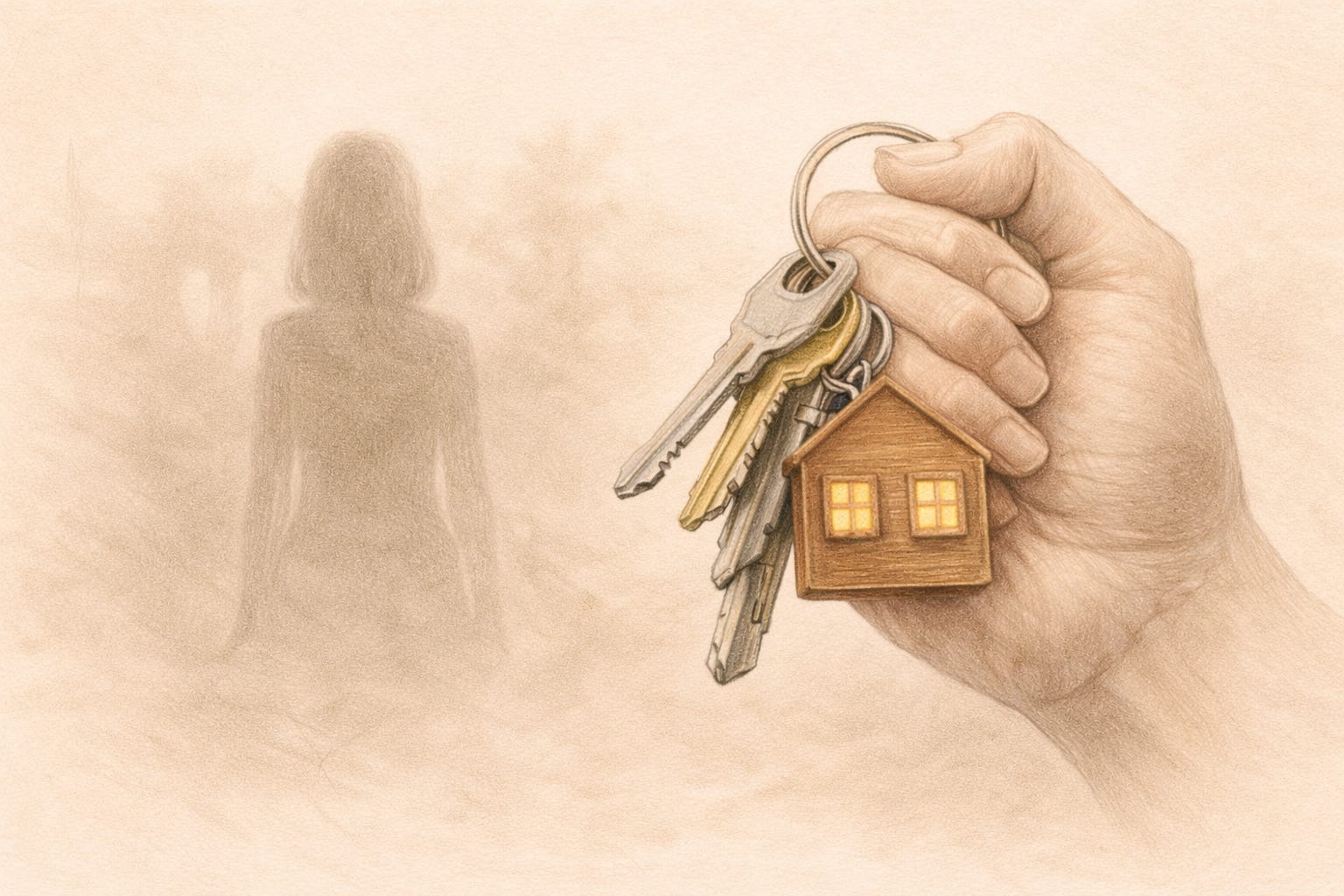
Every now and then I stumble into a book series that takes over my evenings in the best possible way. You know the kind I mean. The sort where you suddenly look up and it’s midnight and you’re whispering just one more chapter even though your eyes are begging for sleep.
That was my experience with The Housemaid series by Freida McFadden. I went in expecting a fun, twisty thriller. I did not expect to get pulled so deeply into Millie’s world or to find myself thinking about these characters long after I turned the final page. What surprised me most is how the series evolves. Each book feels like it is speaking from a slightly different emotional register, almost as if the story grows up as Millie does. The result is a journey that moves from raw survival to something more complicated, more psychological, and honestly more unsettling in its quiet moments.
The series also left me with questions that lingered.
How do you trust people when your life has taught you that trust is dangerous?
Can someone truly move beyond the past, or do we just learn to carry it differently?
And maybe the hardest one: what does healing actually look like when the world you escaped keeps echoing inside you?
If you’ve been curious about the series or you’re deciding whether to dive in, here’s a warm, honest walk through all four books and the themes that make them so gripping.
Summaries of All Four Books
The Housemaid (2022)
The opening book drops us straight into Millie’s life at a moment when she’s desperate for a reset. Fresh out of prison, low on options, and carrying more emotional weight than she admits, she accepts a live-in role with the elegant but strangely unsteady Winchester family.
At first, Nina Winchester seems like the kind of rich, glamorous woman who’s one espresso away from unravelling. But the deeper Millie sinks into the rhythms of the house, the more everything feels wrong. Small lies. Strange rules. Rooms that seem too quiet. And the kind of tension you can feel even when no one is speaking.
Before long, Millie is trapped in a psychological maze where nothing is what it seems. Gaslighting becomes routine. Doors lock from the outside. The house shifts from sanctuary to prison. And just when you think you’ve figured out the game, the story flips itself inside out.
The reveal that Nina orchestrated so much of the chaos not out of cruelty, but strategy, reframes the entire narrative. Millie isn’t just surviving. She’s being tested. And when the book ends, she stands a little taller, a little sharper edged. A survivor who is learning what she’s capable of.
The Housemaid’s Secret (2023)
Book two picks up with Millie now working as a housekeeper-for-hire, doing her best to stay afloat and keep her past at a safe distance. When she steps into yet another perfect looking home, she senses that something is off, but not in the glamorous chaos of the Winchesters. This time the darkness is quieter, more insidious.
Millie uncovers a woman hidden behind closed doors, controlled and terrorized by a powerful husband who presents himself as a pillar of the community. The secret is suffocating, and it echoes pieces of Millie’s own trauma. But instead of being paralyzed by fear, she chooses action.
This book has an undercurrent of fury that feels earned. Millie’s transformation from survivor to rescuer carries emotional weight. And while the plot delivers all the twists you expect from a psychological thriller, there’s also something deeper happening. It’s a story about breaking cycles. About deciding that your own pain won’t keep you from helping someone else.

The Housemaid’s Wedding (2024 short story)
A quieter entry in the series, this short story is set between books two and three. We find Millie preparing for her wedding to Enzo, a man who genuinely loves her and wants to build a life with her.
And yet, joy doesn’t sit easily for someone who’s spent years surviving chaos. Millie wants to trust the stability she’s found, but shadows flicker at the edges of her happiness. She questions her instincts. She looks over her shoulder. She wonders if love is something she deserves or something that will slip through her fingers the moment she lets her guard down.
This little bridge in the series is subtle but important. It shows us the softer side of healing, the one nobody warns you about. Sometimes it’s not danger that terrifies you. Sometimes it’s peace.
The Housemaid Is Watching (2024)
The final book shifts tones in a way that caught me off guard, but in a good way. Millie is now married, raising a child, and building the kind of ordinary life she once only dreamed about. But when new neighbours move in, familiar anxieties begin to stir.
This time, the danger isn’t loud or dramatic. It’s emotional. It’s relational. And the question isn’t just who can be trusted, but whether Millie’s own mind is playing tricks on her. Trauma has its own memory, its own voice, and sometimes it whispers louder than reality.
The twists in this book aren’t merely shocking. They’re introspective. You’re not just asking what’s happening. You’re asking why Millie perceives it that way. And whether peace is possible when the past has carved such deep grooves inside you.
Key Takeaways Across the Series
Themes in The Housemaid by Freida McFadden**
Trust as Fragile Currency
In this world, trust isn’t guaranteed. It’s bartered, manipulated, weaponized. Every relationship in the series from Nina and Millie to Millie and Enzo holds tension around what is spoken and what is hidden. Trust becomes precious precisely because it’s so easily shattered.
Perspective Rewrites Reality
One of the joys of this series is how often your assumptions crumble. Characters who seem unhinged become understandable. Villains reveal moments of humanity. Millie herself transforms from someone fighting to survive into someone capable of shaping her own fate.
Revenge, Justice, and the Cost in Between
McFadden taps into something primal in us. We want justice. We want the villains to fall. But these victories leave emotional wreckage behind. No one walks away clean. Every choice has weight.
Survival vs. Healing
The first books race with adrenaline. The later ones sit with quiet discomfort. They ask the harder question: once you’ve survived the storm, what do you do with the wreckage it leaves inside you?
The Housemaid Quotes Explained
A Few of My Favourites
The Housemaid (Book 1)
“Welcome to the family.”
A line that sounds warm at first, but once the truth unfolds, you realize it was a warning dressed as hospitality.
Epilogue reflection
Millie thinking about helping another woman is such a simple line, yet it signals her evolution. She’s no longer looking only at her own survival. She’s ready to extend her strength outward.
The Housemaid’s Secret (Book 2)
“No one believes the woman.”
A gut punch of a sentence because it’s heartbreakingly true far beyond fiction.
“I won’t let her live in that cage another day.”
This is Millie at her most powerful. Not in brute force, but in conviction.
The Housemaid’s Wedding (Book 2.5)
“I want this to be real, but sometimes real feels scarier than the lies I’ve survived.”
A perfect encapsulation of how trauma reshapes joy.
“Even on my wedding day, part of me still listens for footsteps outside the door.”
You feel this line in your chest. Healing is never as tidy as we want it to be.
The Housemaid Is Watching (Book 3)
“Even in a safe home, the walls still whisper.”
Safety doesn’t silence memory. Sometimes it makes the memories louder.
“What if the person I need to be protected from is the one I love most?”
A chilling question that sits at the crossroads of love and fear.

Insights from All Four Books
Book 1
Resilience isn’t about remaining unbroken. It’s about choosing to rise even when everything in you feels defeated.
Book 2
Survival becomes something deeper when you use it to protect others. Millie becomes a mirror for every woman who refuses to let harm continue unchecked.
Book 2.5
Healing requires courage, especially the courage to accept happiness when chaos has been your normal.
Book 3
This final book reminded me that healing is not a straight line. It’s a negotiation with fear, memory, and the habits your past has trained into you.
Extras to Help You Navigate the Series
Reading Order
The Housemaid
The Housemaid’s Secret
The Housemaid’s Wedding (short story)
The Housemaid Is Watching
Reception Notes
The first two books tend to be universally loved for their pace and twists. The short story is more emotional than thrilling. And the final novel divides readers, depending on whether you want adrenaline or introspection.
Why It’s So Compelling
McFadden turns ordinary homes into battlegrounds. The familiar becomes threatening. Safe spaces become psychological traps. And those short, punchy chapters will keep you saying just one more until suddenly you’ve finished half the book.

Themes Worth Noticing
1. The Gothic Home as a Prison
Even without creaking staircases or candlelit halls, the series channels Gothic energy. Domestic spaces become cages. Luxury becomes illusion. And the home the very place meant to shelter becomes a stage for power.
2. Women and Survival
Each book asks what women must endure to be believed. How they navigate control. How they reclaim agency even when the world doubts their reality.
3. Trauma’s Echo in Everyday Life
Trauma doesn’t vanish. It hides in celebrations, in coffee breaks, in parenting moments, in quiet evenings. McFadden captures that subtle hum beneath the surface.
Character Arcs
Millie Calloway
Her journey is the backbone of the series. From prisoner to fighter to partner and mother, she grows in strength but also vulnerability. Her arc asks whether scars ever fade or simply become part of who we learn to be.
Nina Winchester
One of the most fascinating figures in the whole series. She shifts from villain to strategist to something almost sympathetic. Complexity at its best.
Enzo
Introduced as Millie’s anchor. Warm, steady, comforting. But in the later story, he becomes part of the question rather than the answer. Can love feel safe when you don’t trust your own instincts?
Writing Style and Why Readers Love It
McFadden writes like she’s sitting across from you at a coffee shop telling you a wild story. The prose is simple, but charged. The chapters fly. And before you know it, you’re deep in emotional territory you didn’t see coming.
This accessibility is why the series caught fire on TikTok and online communities. It’s addictive without being dense, dark without being hopeless.

Cultural Impact
Beneath the thrills, the series touches real issues:
the invisibility of domestic abuse
power imbalances between employers and workers
how privilege hides wrongdoing
how easily women’s voices are dismissed
It’s entertaining, yes, but also sharp in its social awareness.
Should You Read the Housemaid Series?
You’ll love it if you enjoy:
fast paced psychological tension
morally complicated women
stories where nothing stays as it seems
You may not love it if you prefer:
slow literary character studies
reliable narrators
stories without emotional heaviness or depictions of harm
The series straddles entertainment and emotional truth. And honestly, that’s what makes it memorable.
Open Questions for You to Reflect On
If you place yourself in Millie’s shoes across these chapters of her life
the trapped young woman,
the fierce protector,
the nervous bride,
the mother questioning her own instincts
which choice would you make?
Would you fight back?
Would you risk yourself to save someone else?
Would you allow love to soften your edges?
Would you walk away when danger and affection start to blur?
And the question that keeps circling back for me:
How do you know when survival isn’t enough anymore, and it’s time to start living?
If this article meant something to you, buying me a coffee is a simple way to support my work. Every contribution helps Wisdom Library continue to grow. Thank you for being here. 💛
Interesting review. I haven’t read fiction since I was in high school. I personally prefer non-fiction books. I do agree though, that some books leave an impression that you recall years later. For me those books are the V.C.Andrews “Flowers in the Attic” Series. I read all the books available back then again when I was in High School. I was in the library every week, picking up the next volume. Although they tried, they never made a movie as good as the books. And after her death, the books in the series weren’t as good as her writing. Also another series that left an impression was the Harry Potter series, which I read as an adult. My son would read one book, then I would read it and we would discuss them together. I still have 7 of the 8 books.
Trust once broken is pretty difficult to regain.