

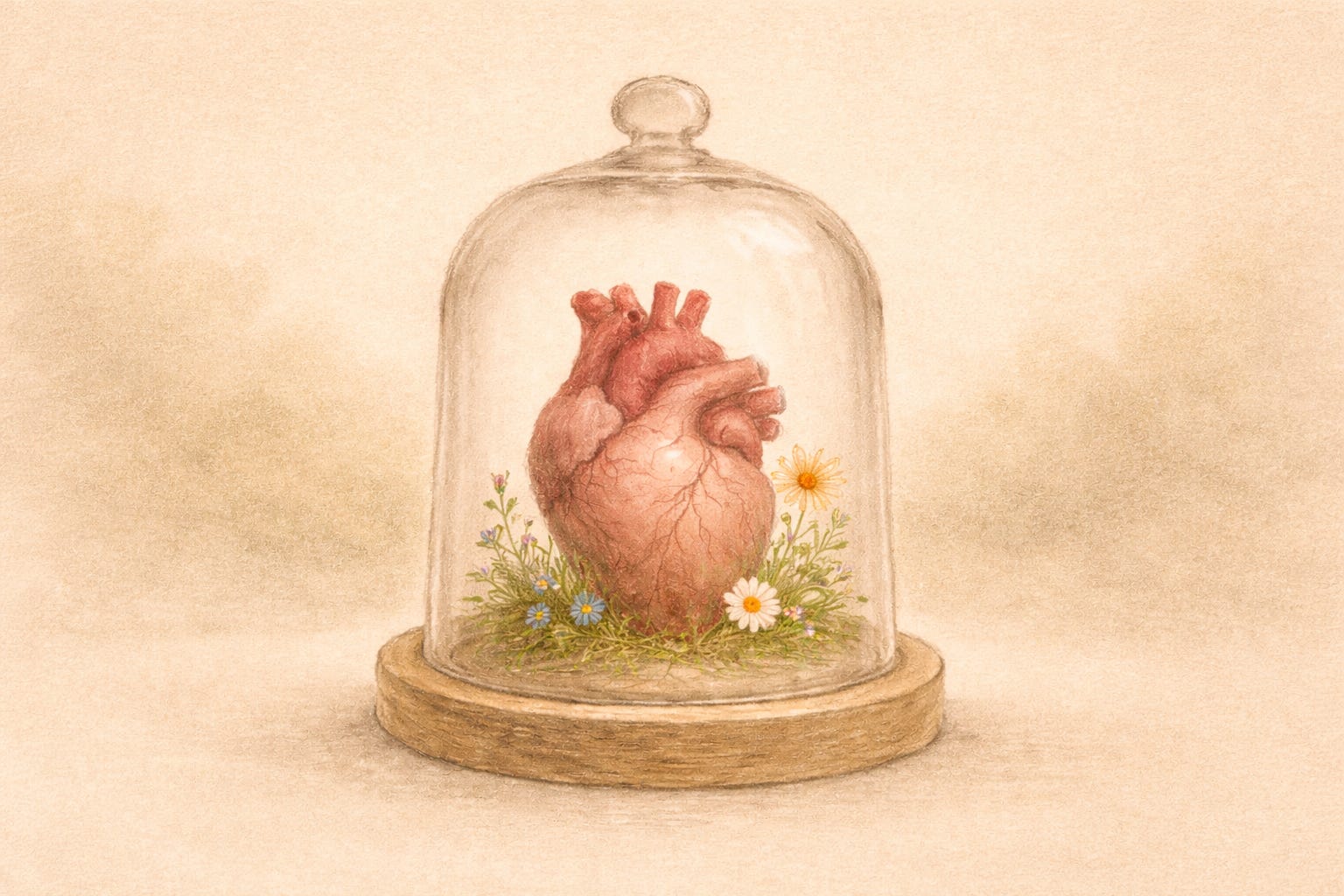
There’s a quote that has been following me around lately. You’ve probably heard it before, maybe on a poster or in a yoga studio somewhere, but every time it returns, it feels a little different. More relevant. More personal.
Take care of your body. It’s the only place you have to live.
The first time I heard it was years ago, during a class with my yoga teacher, Travis Eliot. He said it so casually that half the room probably missed it, but for whatever reason it landed in me like a small bell ringing in the background. I didn’t fully understand why at the time. But lately, as life has grown louder and busier and more demanding, that little bell has grown impossible to ignore.
We plan endlessly for our careers, our relationships, our future homes, even the books we want to read someday. But how often do we plan for our own well-being in the same intentional way? How often do we pause long enough to ask: How is my body doing with all this? Am I taking care of the one place I’m actually guaranteed to live in?
Honestly, I think most of us know the answer.
We wake up and hit the ground running, as if our bodies are these endlessly rechargeable machines that will always find a way to keep up. We stretch ourselves thin, we push past tiredness, we eat whatever is easiest, and somewhere in the shuffle we forget that the body remembers everything we ask of it. Every shortcut, every skipped meal, every late night, every stress that goes unaddressed.
And still, it keeps showing up for us. That part amazes me.
Even when we don’t show up for it.
But lately, I’ve been trying to listen more closely. To pay attention not just when something is wrong, but in the small, quiet moments when everything seems fine on the surface yet my body is whispering for a little more care, a little more presence.
And that’s really what this reflection is about: the pull to return to ourselves, not out of guilt or pressure, but out of respect for the one home we have for our entire lifetime.
The Moment the Quote Really Hit Me
A few weeks ago in yoga, I found myself moving through a familiar flow. Nothing fancy. Nothing impressive. Just breath, movement, breath again. And out of nowhere, that quote resurfaced in my mind. Not loudly, not like a dramatic insight, but more like a gentle nudge.
Take care of your body. It’s the only place you have to live.
As I folded forward, feeling the stretch in the backs of my legs, I realized how easy it is to take this body for granted. I expect it to keep going even when I don’t treat it well. I ask it to be patient when I’m stressed, strong when I’m tired, calm when I’m overwhelmed. I rely on it constantly, yet I forget that it relies on me too.
We talk about stress as if it’s a personality trait, not a physiological state. We treat sleep like it’s flexible, something we can bargain with. We sit for hours, get lost in screens, rush through meals, and call it normal. But the body keeps the score long before we do.
And here’s the thing: our bodies are not just vessels for productivity. They hold our memories, our emotions, our desires, our grief, our joy. They are where every experience happens. They are how we love, how we connect, how we create, how we rest.
When I remind myself of this, something softens. Something shifts. It’s like remembering that my body isn’t an afterthought. It’s the foundation.
And a foundation can only hold so much neglect before it starts to speak up.
Sometimes the voice is subtle, like persistent fatigue. Sometimes it’s sharper, like anxiety humming in the background. Sometimes it shows up as inflammation, digestive issues, irritability, brain fog, or that strange sense of being disconnected from yourself.
There’s research that supports this, of course, but honestly, we don’t need studies to tell us what our bodies already whisper every day. We just need to practice listening.
When Self-Care Stops Being a Buzzword
Self-care has become one of those words people toss around so often that it barely means anything anymore. You can throw it into a sentence and pair it with a face mask or a scented candle and call it a philosophy.
But the real thing the deeper, quieter kind of self-care isn’t glamorous. It rarely fits into perfect routines or colour coded planners.
It looks more like:
choosing a wholesome meal even when the fast option is tempting
resting before you’re exhausted
stretching for five minutes because your lower back is trying to get your attention
drinking water before your head hurts
stepping outside for a breath of fresh air even when your to do list feels glued to you
noticing tension before it becomes a knot tied into your shoulders
None of this is dramatic. But all of it is important.
Over time, these tiny choices accumulate like savings in a well nurtured account. The interest they generate is vitality, clarity, emotional steadiness, and a life that feels more spacious.
And here’s what I’ve learned repeatedly: caring for my body is one of the quickest ways to reconnect with myself emotionally. The two are inseparable. When my body is grounded, my mind feels clearer. When my body is depleted, my thoughts scatter. When I move with intention, I feel more present in every part of my life.
This is the part we don’t talk about enough. Self-care isn’t just physical maintenance. It’s emotional fortification.
The Search for Something Sustainable
Like most people juggling responsibilities and ambitions and hopes for the future, I’ve spent a long time trying to figure out how to take care of myself without turning wellness into another exhausting to do list.
At some point I realized that the habits that stick are the habits that feel compassionate, not punitive. Simple, not grand. Consistent, not dramatic.
One thing that really helped me is what I call the micro-habit method. Nothing fancy. Nothing ground-breaking. Just small choices that are so manageable there’s almost no resistance.
Two minutes of stretching in the morning.
A glass of water before coffee.
A short walk after lunch.
Five deep belly breaths before a meal.
A piece of fruit as the first snack of the day.
These tiny choices don’t feel like much in the moment, but they shift the arc of your day. They shift how you feel in your skin. They shift how you respond to stress.
And maybe most importantly, they shift your identity. You start to think of yourself as someone who cares for their body, not someday but today, even in small ways.
That identity matters. More than we think.
Turning Routine Into a Kind of Gratitude
Lately I’ve been experimenting with a quiet shift in language. Instead of telling myself “I have to work out” or “I should eat better,” I’ve been trying to say “I get to move my body” or “I get to nourish myself.”
It sounds subtle, but it hits differently.
It reminds me that caring for my body is a privilege, not a punishment. It reminds me that movement is something some people would give anything for. It reminds me that access to healthy food is not guaranteed in this world. It reminds me that rest is not laziness. That stillness is not wasted time. That taking care of my body is a way of honouring the life I get to live inside it.
When I frame it this way, self-care stops feeling like a task. It becomes an offering.
Listening for the Body’s Early Messages
One thing I’m trying to get better at is recognizing the early signals before they escalate. Before the body is forced to shout.
A little tightness in my chest when I’ve taken on too much.
A heavy feeling in my legs when I haven’t slept well.
A jittery mind after too much caffeine.
A sense of emotional fragility when I’ve skipped movement for too long.
A headache from forgetting to hydrate.
None of these signs are dramatic. But they’re all clear messages. Invitations, really. Gentle reminders that health isn’t built in grand gestures, but in these tiny moments of awareness.
And when I respond early, everything gets easier. The stress softens. The fatigue lifts. The emotional fog clears. The day feels less like something I have to push through and more like something I get to participate in.
Health, I’m realizing, is the art of paying attention.
Movement as a Conversation, Not a Chore
I used to think movement had to be intense to count. Long workouts, perfect routines, heavy sweat, something that looked impressive. But now, honestly, I just want to feel good in my body. I want strength that helps me lift my groceries without strain and mobility that lets me sit comfortably on the floor and energy that lasts through the afternoon.
I love the idea of functional movement not because it’s trendy, but because it treats the body like a companion rather than a project. Squats that help me stand up with ease. Lunges that keep my hips open. Light planks that remind my core it’s still part of the team. Nothing complicated. Just the kind of movement that makes daily life feel smoother, more grounded, more resilient.
Paired with mindful breathing, it becomes something deeper than exercise. It becomes a dialogue with myself. A moment to check in, to recalibrate, to come back home.
And the beautiful part is that none of this requires a gym or fancy equipment. Consistency is worth far more than complexity.
Rest as a Form of Strength
This one took me longer to understand: rest is not the opposite of effort. It’s what makes effort sustainable.
I’ve started scheduling recovery days in the same way I schedule workouts. Foam rolling, slow stretching, restorative yoga, quiet evenings with no screen glowing in my face. These are the moments when the nervous system unwinds and the body catches up to all the things it’s been holding.
Rest is where integration happens. Rest is where the healing starts.
Rest is where strength is rebuilt.
And honestly, life feels different when rest is part of the routine instead of a last resort.
The Ripple Effect of Treating Your Body Well
Here’s something I didn’t expect: when I take better care of myself physically, I show up differently in my relationships. I listen more fully. I’m less reactive. I’m more patient. My joy has more room to rise to the surface.
When my body feels steady, my mind feels steadier too. When I feel nourished, I don’t seek comfort in unhealthy ways. When I feel rested, I can show up with more presence. And presence is really just another word for love.
The ripple travels far beyond me.
And sure, the journey isn’t linear. Some days I fall back into old habits or forget to slow down or choose convenience over care. That’s human. That’s life.
But perfection was never the goal. Presence is. Intention is. Compassion is.
This is the shape of sustainable self care: imperfect, gentle, persistent.
Returning to the Heart of the Quote
When I circle back to that original quote, it feels less like advice and more like an invitation.
Take care of your body. It’s the only place you have to live.
It’s a reminder that our bodies are not obstacles to be managed or machines to be optimized. They are our first homes. Our longest relationships. Our most faithful companions.
Every breath, every step, every experience happens through this physical form we’ve been given. Caring for it is not vanity. It’s not indulgence. It’s gratitude. It’s wisdom. It’s an act of devotion to our own aliveness.
And if we want a life filled with energy, presence, resilience, and joy, this is where that life begins.
A Question for You
Before you move on with your day, here’s something to sit with for just a moment:
What is one small act you can take today to honour your body and support your well-being?
Not a big overhaul. Not a life change. Just one gentle choice.
A glass of water.
A slow stretch.
If this article meant something to you, buying me a coffee is a simple way to support my work. Every contribution helps Wisdom Library continue to grow. Thank you for being here. 💛
Some really thoughtful reflections in this - especially around the idea of small habits, slowing down, and listening to your body before it starts shouting for attention. I liked the focus on sustainable, realistic self-care rather than the usual extreme “wellness” messaging. A very positive read, with a few lines that genuinely make you stop and think.
Beautifully written dear. There’s something very real in what you shared, especially the idea that the body remembers everything. Sometimes it whispers for so long… until we finally learn how to listen. This resonates deeply. The way you described listening to the body before it has to shout is something I see so often in my work. We tend to wait for discomfort to become loud before we respond, when the body has been gently speaking all along.