

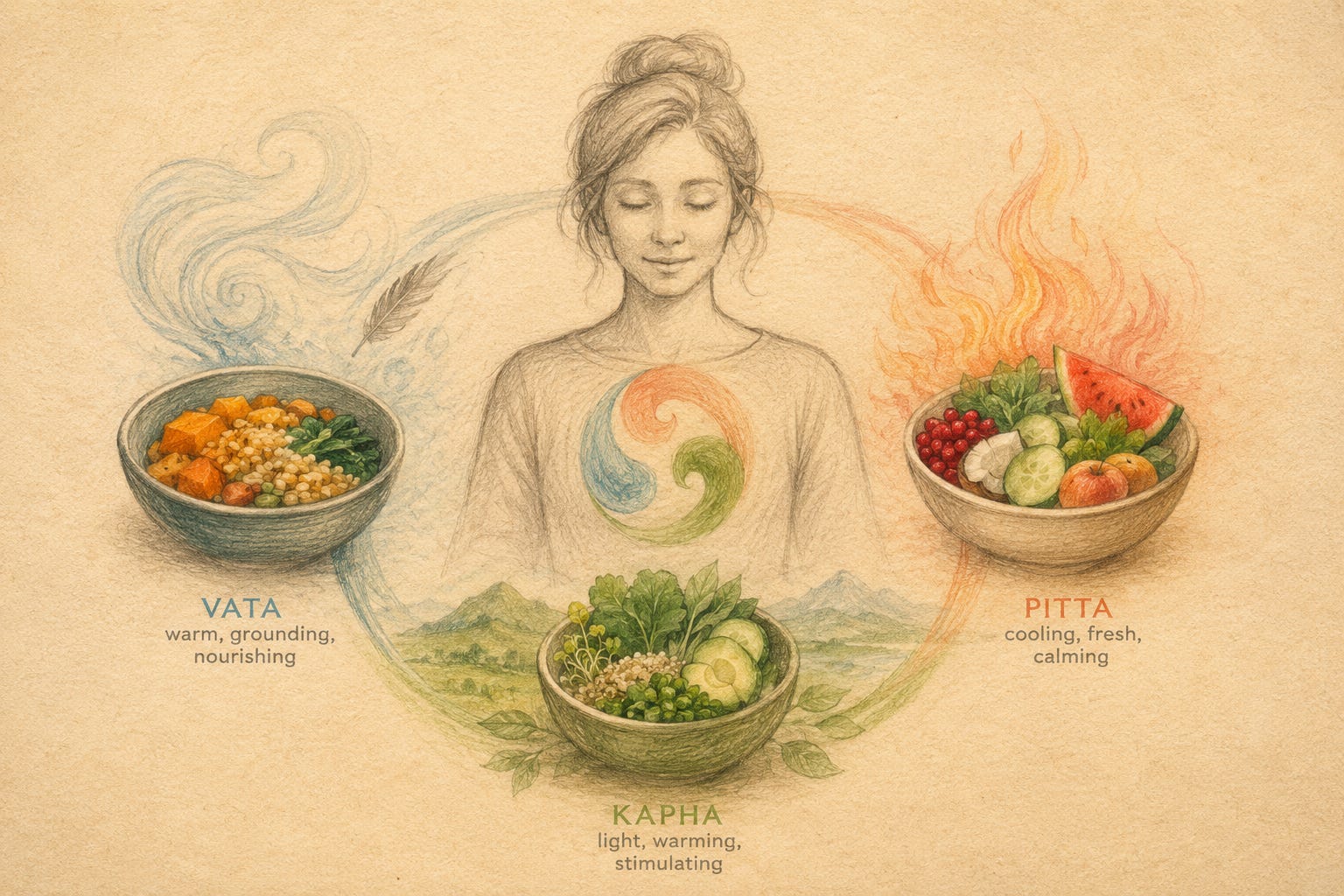
Many years ago, while taking an Ayurveda course, I came across a simple idea that changed the way I looked at food.
Until then, nutrition had always felt like a collection of rules. Eat this. Avoid that. Follow this diet. Track these numbers.
Ayurveda approached things differently.
Instead of asking, “What is the healthiest food?” it asked, “Healthiest for whom?”
That small distinction caught my attention.
Two people can eat the same meal and have completely different experiences. One feels energised. The other feels sluggish. One sleeps well after it. The other lies awake feeling uncomfortable.
Ayurveda explains this through the concept of the three doshas - Vata, Pitta and Kapha. These are considered different energetic constitutions that influence everything from digestion and appetite to sleep patterns, mood and energy levels.
Whether you fully embrace Ayurveda or simply find it interesting, I think there is something valuable in the idea that nourishment isn’t always one-size-fits-all.
Over the years, I have found myself returning to this framework, not as a rigid system, but as a useful lens for paying attention to how food actually makes me feel.
Three Different Constitutions, Three Different Needs
According to Ayurveda, everyone contains all three doshas, but usually one or two tend to be more dominant.
Vata is associated with air and space. People with strong Vata qualities often have active minds, creative tendencies and fluctuating energy levels. They may forget meals, become hungry suddenly, or notice that stress affects their digestion quickly.
Pitta is associated with fire and water. Pitta types often have strong digestion, focused personalities and plenty of drive. They tend to feel hungry regularly and can become irritable when meals are delayed.
Kapha is associated with earth and water. Kapha individuals often have steady energy, strong endurance and calm temperaments. Their digestion may move more slowly, and they often feel best when meals are lighter and stimulating rather than heavy.
Most people are a blend rather than fitting perfectly into one category. What matters most is noticing patterns rather than trying to put yourself into a box.
Understanding Your Natural Constitution
When identifying your dosha, there are two important concepts to understand.
The first is your Prakriti, which refers to your natural constitution. This is the dosha combination you were born with and it tends to remain relatively stable throughout your life.
You may be Vata-Pitta, Pitta-Kapha, Vata-Kapha, predominantly Vata, predominantly Pitta, predominantly Kapha, or relatively balanced across all three doshas, often referred to as Tridoshic.
The second concept is your Vikriti, which refers to your current imbalance. This is what is happening in your body right now and can change depending on circumstances and lifestyle factors.
For example, a naturally Pitta person may currently have excess Vata due to stress, lack of sleep, travel or irregular eating habits. Similarly, a Kapha person may temporarily develop excess Pitta during a particularly hot summer or stressful period.
This is why, from an Ayurvedic point of view, understanding your dosha is important. It provides a framework for recognising your body’s natural tendencies and choosing foods that support your unique constitution rather than following generic advice that may not suit you.
Signs You May Have A Strong Vata Constitution
People with a Vata-dominant constitution often have a slim frame and may find it difficult to gain weight. Their skin can be dry, their hands and feet often feel cold, and their appetite may vary considerably from one day to the next. Many Vata individuals are also light sleepers and notice that changes in routine affect them quite quickly.
From a personality perspective, Vata types are often creative, curious and quick thinkers. They enjoy new ideas, become excited about possibilities and are usually comfortable with change. However, when life becomes particularly busy or stressful, they may feel anxious, overwhelmed or scattered more easily.
When Vata falls out of balance, common signs include anxiety, insomnia, constipation, bloating, dry skin and a general feeling of being pulled in too many directions at once.

Signs You May Have A Strong Pitta Constitution
Pitta-dominant individuals often have a medium build, a strong appetite and naturally warm body temperature. They tend to sweat more easily than other constitutions and usually have strong digestion.
Their personalities often reflect many of the qualities associated with fire. Pitta individuals are frequently driven, organised, ambitious, competitive and decisive. They enjoy setting goals and moving towards them with purpose.
When Pitta becomes excessive, these strengths can sometimes become challenges. Irritability, anger, acid reflux, inflammation, skin rashes and impatience are all common signs that Pitta may be out of balance.
Signs You May Have A Strong Kapha Constitution
Kapha-dominant people often have a larger frame, gain weight more easily and possess steady energy throughout the day. Their skin is frequently smooth and they often have strong endurance and resilience.
Emotionally, Kapha individuals are often calm, patient, loyal and reliable. They tend to be the people others can depend on during difficult times because they bring a sense of stability wherever they go.
When Kapha becomes excessive, however, that stability can sometimes turn into stagnation. Common signs include low motivation, weight gain, congestion, sluggish digestion and water retention.
Finding Your Dosha Through Online Assessments
If you are curious about your dosha, several online assessments can provide a useful starting point.
I would encourage taking more than one assessment and looking for patterns across the results rather than relying on a single score.
The goal is not to place yourself into a perfect category but to gain a better understanding of your natural tendencies and how they influence your relationship with food, energy and well-being.
What To Put On Your Plate According To Your Dosha
One of the most practical parts of Ayurveda is its approach to food.
Rather than prescribing the same meals for everyone, it suggests choosing foods that help balance your dominant tendencies.
If You Tend Towards Vata
Vata is naturally light, dry and mobile. Because of this, Vata often benefits from foods that are warm, grounding and nourishing.
Think of meals like vegetable soups, stews, curries, porridge, roasted root vegetables and cooked grains. Warm breakfasts often work particularly well. A bowl of oats with cinnamon and cooked fruit tends to support Vata far better than grabbing a cold yoghurt on the way out of the door.
Healthy fats are also important. Foods such as avocado, olive oil, nuts, seeds and nut butters can help create a greater sense of satisfaction after meals.
Many Vata types notice they feel better with regular meal times. Skipping meals may leave them feeling scattered, anxious or low in energy.
Cold salads, excessive raw vegetables and large amounts of iced drinks may sometimes leave Vata individuals feeling less balanced, especially during colder months.
Vata generally benefits from warm, moist, cooked, nourishing and slightly oily foods.
Here is a list of what foods for Vata
Best vegetables: sweet potato, pumpkin, squash, carrots, beetroot, parsnips, courgette, asparagus, green beans, okra and cooked spinach.
Best fruits: bananas, mango, papaya, peaches, apricots, dates, figs, avocado, melon, cherries and grapes.
Best grains: oats, rice, quinoa, wheat, couscous and cooked barley.
Best proteins: eggs, chicken, turkey, salmon, white fish, tofu and well-cooked lentils.
Best nuts and seeds: almonds, walnuts, cashews, pecans, chia seeds and sesame seeds.
Best oils: olive oil, sesame oil, ghee and avocado oil.
Best spices: cinnamon, cardamom, ginger, nutmeg, cloves and fennel.
Foods that may be better enjoyed in moderation include cold smoothies, ice cream, raw salads, crackers, popcorn, dry cereals, excess beans and carbonated drinks.

If You Tend Towards Pitta
Pitta is naturally hot, intense and sharp. Because of this, Pitta generally benefits from foods that cool and calm.
Fresh vegetables, leafy greens, cucumber, courgette, sweet fruits and whole grains often work well. Many Pitta individuals thrive on meals that feel fresh and colourful rather than heavily spiced or excessively rich.
Cooling foods such as watermelon, pears, coconut and mint are often recommended.
While spicy foods can be enjoyable, some Pitta-dominant people notice that large amounts of chilli, alcohol, fried foods or highly acidic foods leave them feeling uncomfortable or overheated.
Regular meals are particularly important. People with strong Pitta tendencies often know exactly what happens when they become too hungry. Energy drops, patience disappears and everything suddenly feels more irritating than it should.
A balanced lunch is often one of the most important meals of the day for Pitta.
Pitta generally benefits from cooling, fresh, hydrating and mild foods.
Here is a list of what foods for Pitta
Best vegetables: cucumber, lettuce, celery, broccoli, cauliflower, courgette, green beans, asparagus, peas and Brussels sprouts.
Best fruits: pears, apples, grapes, melon, watermelon, pomegranate, coconut, mango, cherries and plums.
Best grains: basmati rice, oats, barley, quinoa and wheat.
Best proteins: chicken, turkey, white fish, tofu, beans and lentils.
Best dairy: milk, cottage cheese, yogurt in moderation and ghee.
Best oils: coconut oil, olive oil and ghee.
Best spices: coriander, fennel, mint, cardamom, turmeric and dill.
Foods that may be better limited include chilli, hot peppers, excess garlic, excess onion, vinegar, alcohol, coffee, fried foods and very salty foods.
If You Tend Towards Kapha
Kapha is naturally heavy, steady and grounded. While these qualities can provide stability and resilience, too much Kapha can sometimes feel sluggish.
Kapha often benefits from foods that are lighter, warming and stimulating.
Meals filled with vegetables, beans, lentils, spices and lighter proteins can be supportive. Many Kapha types feel better when they start the day with something lighter rather than a large heavy breakfast.
Spices such as ginger, turmeric, black pepper and cinnamon are often encouraged because they bring warmth and movement.
Large portions of heavy dairy, fried foods and very rich desserts may leave Kapha individuals feeling slow and tired.
Many people with Kapha tendencies also notice that movement before meals or after meals helps digestion significantly.
Kapha generally benefits from light, dry, warming and stimulating foods.
Here is a list of what foods for Kapha
Best vegetables: leafy greens, kale, spinach, rocket, cabbage, broccoli, cauliflower, radish, peppers, mushrooms and Brussels sprouts.
Best fruits: apples, pears, pomegranate, berries, cherries, cranberries, apricots and peaches.
Best grains: quinoa, barley, buckwheat and millet.
Best proteins: lentils, chickpeas, black beans, white fish, chicken breast and turkey breast.
Best spices: ginger, black pepper, cayenne, cinnamon, turmeric, mustard seed and cumin.
Best drinks: ginger tea, cinnamon tea, green tea and warm lemon water.
Foods that may be better limited include heavy dairy, cream, excess cheese, fried foods, sugary desserts, excess wheat, large portions, excess oils and ice-cold drinks.

Looking Beyond Labels
One thing I appreciate about Ayurveda is that it encourages observation.
Instead of focusing entirely on calories, macros or food trends, it asks questions like: How do you feel after eating? Do certain meals leave you energised? Which foods seem to support your digestion? When do you feel your best during the day?
These questions sound simple, but many of us rarely stop to ask them.
We often eat while answering emails, scrolling through our phones, rushing between meetings or thinking about the next thing on our list.
The body is constantly giving feedback, but it can be surprisingly easy to miss.
Ayurveda encourages paying attention to those signals. Not because every sensation requires analysis, but because your own experience is often one of the most useful sources of information you have.
The Small Habits That Matter As Much As The Food
One aspect of Ayurveda that often gets overlooked is that nourishment is not only about ingredients.
How you eat matters too.
Many traditional Ayurvedic teachings encourage eating in a calm environment, chewing thoroughly and avoiding excessive distractions during meals.
This isn’t about perfection. It’s about giving your body a chance to recognise that food has arrived.
Think about the difference between eating lunch while sitting outside for fifteen minutes compared with eating the same meal while replying to messages and rushing through your inbox.
The food might be identical, but the experience is not.
Over time, those small moments can influence digestion, satisfaction and your overall relationship with eating.
Why This Supports Body, Mind And Heart
What has always appealed to me about Ayurveda is that it views nourishment as something bigger than nutrients alone.
Of course, nutrition matters. Protein matters. Fibre matters. Vitamins matter.
But food also shapes our daily experience.
A warming bowl of soup on a cold evening offers something different from a rushed meal eaten standing at the kitchen counter. A colourful plate of vegetables can influence how we feel physically and mentally. A regular meal routine can bring stability to an otherwise chaotic week.
From a physical perspective, choosing foods that suit your constitution may support digestion, energy levels, appetite regulation and overall comfort.
From a mental perspective, paying attention to how food affects you encourages greater self-awareness.
From an emotional perspective, food often becomes a form of care rather than another item on a checklist.
Some of the most nourishing meals I remember were not particularly complicated. A simple bowl of porridge on a cold morning. A homemade soup after a long day. Fresh fruit during a hot summer afternoon.
Food does not always need to be extraordinary to be meaningful.
My Favourite Way To Apply Ayurveda
If there is one thing I have taken from Ayurveda, it is this:
Pay attention.
Notice what gives you energy.
Notice what leaves you feeling heavy.
Notice what helps you sleep well.
Notice what supports your mood.
You do not need to memorise every dosha characteristic or follow every traditional recommendation.
You can start by becoming curious about your own experience. That curiosity often teaches more than any food plan ever could.
Food For Thought
The best diet is not the one that works on paper. It is the one that helps you feel well enough to live your life fully.
I come back to this idea often.
There are countless opinions about food. Every year brings a new trend, a new set of rules and a new list of foods to fear or celebrate.
Yet the most useful question remains surprisingly practical:
How does this food help me feel?
That question encourages a relationship with food based on awareness rather than rules.
Your Turn To Reflect
If you were to look back over the past few weeks, which meals left you feeling your best?
Were they warm or cold?
Light or substantial?
Fresh and cooling or rich and comforting?
Do you notice patterns in your energy, digestion or mood after certain foods?
Whether you explore Ayurveda further or not, these observations can be valuable.
Sometimes nourishment begins with paying closer attention to what has been in front of us all along.
The body often tells us more than we think. We only need to listen.
If this article meant something to you, buying me a coffee is a simple way to support my work. Every contribution helps Wisdom Library continue to grow. Thank you for being here. 💛
This is such a practical, grounded guide. Recognizing my own Vata tendencies to get scattered or jump straight to cold, quick meals when busy explains so much about my digestion. Grounding things with warm, nourishing stews and actual meal routines makes a world of difference. Thank you for the wonderful checklists!
Hi, I really appreciate this post and am considering the way what kinds of foods I am attracted are connected to my experiential landscape and how i am internally processing it. I notice that when i feel more "sluggish" if I eat foods that are heavy, it worsens it. But if I eat "lighter" and brighter foods, i pull out of the sluggish mood more easily. Same goes for the other doshas. I don't really fit in one category.......although i perhaps have a stronger tendency towards one vs the others when life gets unbearable.